Showing posts with label Wider Frame. Show all posts
, , , , ,

Twitter as Conscience

Friday, July 15, 2011 1 comments

By August Schulenburg

An odd thing occurred to me several days ago. I had my Tweetdeck open, and was following a number of hashtags, including #MarriageEquality, #Iraq, #Afghanistan and #Women2Drive.

For those not Twitter-inclined, this means two things: streams of 140 character messages relating to those hashtags are updated in real time on my Tweetdeck platform, and some of those messages pop up in the right hand corner of my screen.

What this means is, while I'm working, tweets about #Iraq or the Saudi campaign for gender equality will appear. If I'm focused, I don't notice the tweets, but when I'm between thoughts or projects, they'll catch my eye, and if they seem important, I'll click on them.

While this may seem like inviting a restless three year old into your brain to poke at your mind, it actually functions as an odd sort of conscience. If you're like me, you pay lip service to caring about the consequences of our wars in #Iraq and #Afghanistan; in theory, you support gender and marriage equality.

But life moves fast, and it's all too easy to go weeks without thinking about these things, let alone doing something about them.

That is not possible with the tweetdeck open and the hashtags blazing. And so however absurd it might sound, twitter has become a part of my conscience, reminding me hourly of the pain of our wars and the hope of our recent human rights revolutions.

It is too soon for me to say what deep impact this will have: so far, it's upped my slacktivist signing of online petitions, and doubled my contact with my elected representatives. That's not enough, but it's more than I've done in a long time, and it wouldn't be possible without my Twitter conscience occupying an increasing space in my consciousness.

For all the utopias and dystopias Twitter has inspired, it remains a platform, a tool, an extension of and gateway to the human spirit. It can be used to the widen the circle of empathy and promote civic engagement; just as it can also bring out the gang within us, as we #hashstone those that displease or bore us.

All of this grows out of the feelings in my last post, You Must Enter The Theatre Through The World. Following up on that post, here are some more Flux-framed thoughts that my desktop Jiminy Cricket brought me:

Ajax in Iraq: Yesterday, I found two heartbreaking stories of soldier suicides: Jamie McMullin "He lost a lot of friends. He had 12 poppies tattooed on his right arm, and each one was for a friend that he had lost over there"and Ian McConnell. The picture of Sgt. McConnell shaking hands with the Afghan boy is especially moving, as is the determination of both families to share these stories to prevent this from happening again. As Pisoni says, "We should have paid better attention..."

But there is also this story of courage from Kabul, where women protested against the constant harassment they face in the streets. Whatever my feelings about the war may be, this kind of protest never could've happened under the Taliban. I was also heartened by these stories of amateur astronomers in Afghanistan, and UNICEF's use of comic books to communicate with illiterate Afghans (where there is a 28% literacy rate).

Deinde: I was very much reminded of Deinde by this story of how our minds have adapted to Google. Instead of remembering the information, our brains remember where we can find the information, hence the title, The Extended Mind.

Collaboration: I'm fascinated by this audience engagement measurement tool, though before we use it at a Food:Soul, here is a helpful corrective to letting crowdsourcing solve all our problems.

Joy: I was intrigued by the sound of Paul Bloom's book How Pleasure Works, and especially by this quote:
"If you look through a psychology textbook, you will find little or nothing about sports, art, music, drama, literature, play, and religion. These are central to what makes us human, and we won’t understand any of them until we understand pleasure."
I've written here about how the evolutionary advantages of pattern recognition became our sense of beauty, and it seems like his book explores similar themes. Flux book club, anyone?
Read the full story

, , , , , ,

You Must Enter The Theatre Through The World

Wednesday, July 13, 2011 2 comments

By August Schulenburg


"You must enter the theatre through the world."
-Joe Papp

This quote, shared by Todd London at the 2011 TCG Conference (and tweeted by me), has continued to stick with me, touching on a feeling I tried to put into words nearly a year ago in The Wider Frame.

As I wrote then: "Increasingly, I am seeing the problems that face the theatre as woven into a larger context; and I am coming to believe that we can't talk about the problems facing the field without also talking about that wider frame." I tried to explore those frames through our season of Dog Act, Ajax in Iraq and Menders.

That feeling has only grown in the past year, though I have been woefully bad at putting those feelings into action. Recently, that has changed, and as I've been taking more steps towards direct activism, that feeling of connection between making theatre and achieving social justice has grown.

I have come to believe increasingly in the words of Teresa Eyring's closing speech at the conference:
"...but there are some ideals we cannot relinquish; there are some dreams that we won’t let go. The ideal that every human being has a right to peace, freedom, and creative self-expression; the ideal that every community is sustained by that creative self-expression; and the dream of a global stage where the stories of those communities are freely exchanged; we hold onto these things, because without them, theatre has no meaning.

Because theatre does not exist in opposition to Facebook and Twitter; theatre is not in competition with television or film: all of these forms, old and new, are in service to the expression of the human spirit. When Twitter helps spark a revolution against an oppressive regime, that is a victory for theatre..."

To that end, and in hopes of reinvigorating the sometimes fading energies of this online space, I'm going to be letting the world in.

I will try to steer that engagement through the lens of our Core and Aesthetic Values, and the plays that Flux has produced or developed that have shaped our mutual experience. I will preface each piece of the world through one of those values or plays, to hopefully lend a coherency to this effort, and keep this from feeling like we're moving too far afield from more Flux-centric updates and musings (which will of course continue).

So, here we go!

Ajax in Iraq: The Marine Times reports on the drawdown of troops in Afghanistan, and the HuffPo has some interviews with soldiers in both Iraq and Afghanistan who are not looking forward to the end of their tour of duties. This reminds me of many quotes from our recently produced play...and this petition is an easy way to help a soldier's family keep their home.

Dark Matter: The holographic theory of the universe is gaining adherents. For those not obsessed with cosmology and physics, this theory essentially states that our universe is a four dimensional projection of a five dimensional universe. Says physicist Kostas Skenderis:
"If we look forward to 50 years from now, we will see this period as a precursor to a time when physics is totally reformulated in the language of holography," he says. "Once the theory is properly fleshed out, we will be able to apply it to almost any problem."
Menders: I recently discovered this blog Gender Across Borders, which recently posted a penetrating look at the Saudi Women Drivers movement, #Women2Drive, and the movement's surprising lack of support from the United Nations' UNWomen.

Indie Theatre: The good folks of the New York Innovative Theatre Awards have reversed their new nomination party policy based on feedback from the community. Kudos to an institution being responsive and nimble enough to alter course and better serve their constituency - no easy feat.

Collaboration: Have you heard about Citizenside? This post explains how the crowdsourced citizen photo journalist project builds trust and engagement among its users. The quote struck home for some of my recent thinking about the challenges facing theatre:
"The traditional one-way vertical relationship from the mass media to the audience does not exist anymore. Indeed, the whole notion of audience does not exist anymore, as users are now taking an active role in the creating and distribution of media."
There is already some stir about crowdsourced dramaturgy in generating source material for plays, and I'm very interested in Flux exploring this.

So...that's a start. What world are you walking through to enter the theatre?
Read the full story

, ,

On Theater and Cosmology

Tuesday, May 10, 2011 0 comments

Hey all, Isaiah here.

You may know the Innovative Theater people for their annual IT Awards, which recognize excellence in the Off-Off-Broadway world (Flux productions have been nominated eight times; Asa Wember won Best Sound Design in '08 for his work on
Angel Eaters), but they also host a superb blog fittingly called "Full of IT." Our own August Schulenburg is this week's guest blogger there, and I encourage you to check IT out (har har).

As always, Gus brings that Wider Frame brain of his to bear in the first post of the week as he analyzes, oh, just the universe, life itself, consciousness, and technology. You know, those little things.

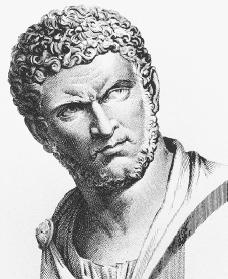
Taking Marcus Aurellius, who furrows away up at the top of this post, at his word ("he who does not know what the world is does not know where he is"), Gus analyzes each of these aspects of creation in turn. Specifically, he's interested in their individual and differing relationships to change, loss, and time. It's a surprisingly quick read for the breadth it covers, and I've been chewing it over all day.

I figured that while Gus, ever modest, wouldn't want to link to himself, I am bound by no such rules. So head on over. Myself, I'm more of a Kurtzweilian than Gus is (Singularity ho!), but either way I can't wait to see the next couple of posts.

Read the full story

,

Wider Frame: Menders

Saturday, December 18, 2010 0 comments

(What is The Wider Frame?)

Though Menders is a year away, it's not to soon to be thinking of the ripple in the real world this play makes. This is especially true on a day where the Senate votes to repeal Don't Ask, Don't Tell; an act that connects directly with Menders' themes of conflict between military service and sexuality.

There are a number of ways we'll be looking to frame the action of the play in a wider context, including blog posts and pre/post show speakers and conversations. Here is a list of some of the interesting possibilities - if this sparks an idea for a pre-show event, post-show speaker, or blog feature, please email me at gus at fluxtheatre dot org, or make a note in the comments.

Potential Frames:
Subversive Stories: Drew, the teacher of young guards Corey and Aimes, tells them stories that subtly challenge their beliefs of what they're guarding and why. The history of storytelling as means of subverting oppression is one exciting way to frame this play.

Conformity of Sexuality: As mentioned above, Menders also deals with how fear makes us hunger for conformity, especially in regards to sexuality. Unfortunately, this frame is still too much with us, and it will be an important part of work within and surrounding the play.

The Charge of Teaching: The occasional erotic charge between teachers and students has always been a troubling part of that power dynamic; how much of it is inherent in sharing knowledge, and how much is a perversion? That moral ambiguity is just one frame that gives Menders such a deceptively deep impact.

What Price Safety?: How much freedom are we willing to give up to feel safe? This question plays out in airports, on the sides of highways, and in this play.

Re-purposed Myth: The two main stories Drew tells are inspired by myths; why are we drawn back to using and re-imagining these kinds of stories, and what impact does it have on our culture?

Regimes and the Monopoly of Information: Oppressive regimes demand a control over information to maintain their version of the culture's narrative. How do contemporary versions of Menders' walled city do it? What is the cost of that monopoly on story?

This is just a start for Menders, as our principle energies are focused on the imminent Dog Act, but let us know if any of these frames inspire any ideas, and we'll be following up with more on these frames in later posts!
Read the full story

,

Wider Frame: Ajax in Iraq

(What is The Wider Frame?)

A play that deals so directly with our current Iraq war can't help but be seen in the context of a wider frame. In producing Ajax in Iraq, we must do justice not only to the play itself, but to subject matter of the play, the lives of the soldiers serving in our two wars. But there are other exciting frames to this dazzling and complex play.

We'll share these frames through blog posts and pre/post show speakers and conversations. Here is a list of some possibilities - if this sparks an idea for a pre-show event, post-show speaker, or blog feature, please email me at gus at fluxtheatre dot org, or make a note in the comments.

Potential Frames:
Veteran Care: America's care of its veterans remains fraught after Walter Reed, and with so many veterans returning in this uncertain draw down, questions of how to honor their service are painfully timely and central to Ajax in Iraq.

Gender and Service: A.J., the central character of the modern world of Ajax in Iraq, is a female soldier who suffers a betrayal from a male commanding officer. How is the experience of a female solider different than a male soldier?

Sophocles' Ajax: A.J.'s story runs parallel to that of Sophocles Ajax, re-imagined by Ellen McLaughlin in her ongoing work with Greek theatre. It would exciting to explore how the Ajax story has been interpreted throughout history.

Temporary Insanity: The difficult questions of this legal idea are given visceral life in what happens to A.J. and Ajax when they are betrayed. How easy is it to lose ourselves in the mindless violence of cruelty?

Iraq History: The strata of Ajax in Iraq go beyond the parallel tracks of A.J. and Ajax to include such historical figures as Gertrude Bell. How did a country made up of such antithetical cultures wind up existing, and how can it (or should it be) sustained?

Military and Civilian Divide: Douglas B. Wilson says that "less than 1% of the American public are serving in uniform serving on battle fronts." What is the cost of that experiential divide, and how can it be bridged? What role does theatre serve in doing so?

This is just a start for Ajax in Iraq, as our principle energies are focused on the imminent Dog Act, but let us know if any of these frames inspire any ideas, and we'll be following up with more on these frames in later posts!
Read the full story

,

The Wider Frame: Dog Act

(What is The Wider Frame?)

It may seem that a post-apocalyptic vaudeville like Dog Act may not have a whole lot of real world resonance. But for a play of such wild imagining and comic invention, the painful and beautiful stuff of the real world runs through it.

There are a number of ways we'll be looking to frame the action of the play in a wider context, including blog posts and pre/post show speakers and conversations. Here is a list of some of the interesting possibilities - if this sparks an idea for a pre-show event, post-show speaker, or blog feature, please email me at gus at fluxtheatre dot org, or make a note in the comments.

Potential frames:
Recycling: In the post-apocalyptic world of Dog Act, everything that remains is sacred, because everything must be used for survival. The scavenger tribes roaming the wilderness treat "reduce, reuse, recycle" as a sacred saying.

Vaudeville: More than just the detritus of the pre-apocalypse is recycled; stories and ways of telling them are also repurposed. Liz's fascinating scramble of pop culture, biblical texts and more is filtered through a vaudevillian way of story-telling; and it would be exciting to have current vaudevillian lovers talk about (and share) their work.

Invented Instruments: Dog Act is a play with music, so how do you make music when most instruments have been reused as weapons or firewood? We're hoping to create some intruments from found and discarded materials, and would love to feature the work of artisans already making music this way.

Weather Troubles: The world of Dog Act has a deeply troubled ecology, with earthquakes and momentary loss of gravity amongst its ailments. But the rapidly shifting seasons - reminiscent of Midsummer - are the greatest challenge, with both winter and summer possible in a single day. With global warming making our planet's weather patterns increasingly unstable, Dog Act could serves as a playful way to talk about this serious issue.

Guilt and Trauma: Despite being a comedy, Dog Act wrestles with how we process guilt and trauma. How do we recover our sense of self from our worst mistakes? It would be fascinating to talk to psychologists who deal with these questions, or host a story circle for our community to share our own difficult stories.

Communal Music: One of my favorite recent events was the Ukulele Orchestra of Great Britain's Ode to Joy event, where they taught an audience of uke players to play Beethoven's tune, and then all played it together in performance (1,008 ukes!) Given that the banjo may anchor the found instruments we create, could we teach one of the songs in the play to an audience full of banjo players for the greatest curtain call jam session ever?

Apocalypse: We're always wondering about how the world might end, and what might go on after it does - it would be a great pre-show discussion to look at the different ways we might go, and then enter into the joy and ache of surviving that is Dog Act.

Scavenging: The aforementioned scavenger tribes are more than just scary, funny foils; they represent a real resilience and cleverness, and it would interesting to look at contemporary scavenger movements like dumpster diving to learn a different approach to our cycle of waste.

Tribalism: And speaking of those tribes, examining the past and present social structure of tribes would be a great frame on the vauder and scavenger tribes of Dog Act.

So let us know if any of these frames inspire any ideas, and we'll be following up with more on these frames in later posts! Read the full story

The Wider Frame

Tuesday, August 24, 2010 10 comments

Increasingly, I am seeing the problems that face the theatre as woven into a larger context; and I am coming to believe that we can't talk about the problems facing the field without also talking about that wider frame.

I think we can't talk about gender equity in season selection without talking about the 80 cents that women make to a man's dollar, or the woeful 3% of Fortune 500 companies led by women.

If we want to talk about the divide between artistic and administrative compensation, we need to also talk about CEO salaries that are 344 times that of the average worker.

If we talk about diversity on our stages, we need to remember that by 2050, America's minority population will exceed 50%.

When we talk about the financial growth of theatres, we need to factor in the externalized costs of theatre production, the same as every other business striving to move from GDP to GPI.

If we're concerned about theatre's declining relevance, we need to see it as connected to declining rates of empathy and creativity; and wrestle with the rapid changes to human consciousness.

The fight for better representation of African-American and Latino artists on our stages is related to the struggle to change a prison system that incarcerates black men at a rate over 6 times higher than that of whites; and that issues warrantless arrests for suspected illegal immigrants.

As we endlessly debate marketing tactics to increase our audience size, we need to remember that struggle takes place in the context of an increasingly disconnected civic society.

The discussion of aesthetic diversity, and the censorship of commerce, is intimately related to the impulses that are leading to the decimation of biodiversity and indigenous cultures.

The call for better arts advocacy won't work without calling to decrease voter apathy and the politics of demonization.

Theatre may be a mirror held up to nature; or it may be hammer with which to shape it; either way, we know which direction it's supposed to be facing. Lately, I've realized my own thought, and much of the discussion I'm reading, has been pointing theatre in the wrong direction. Read the full story